
Troubleshooting Guide
Spiral mixer vs planetary mixer isn’t just a buying decision, the two designs fail in genuinely different ways. Here’s what tends to go wrong with each, and why.
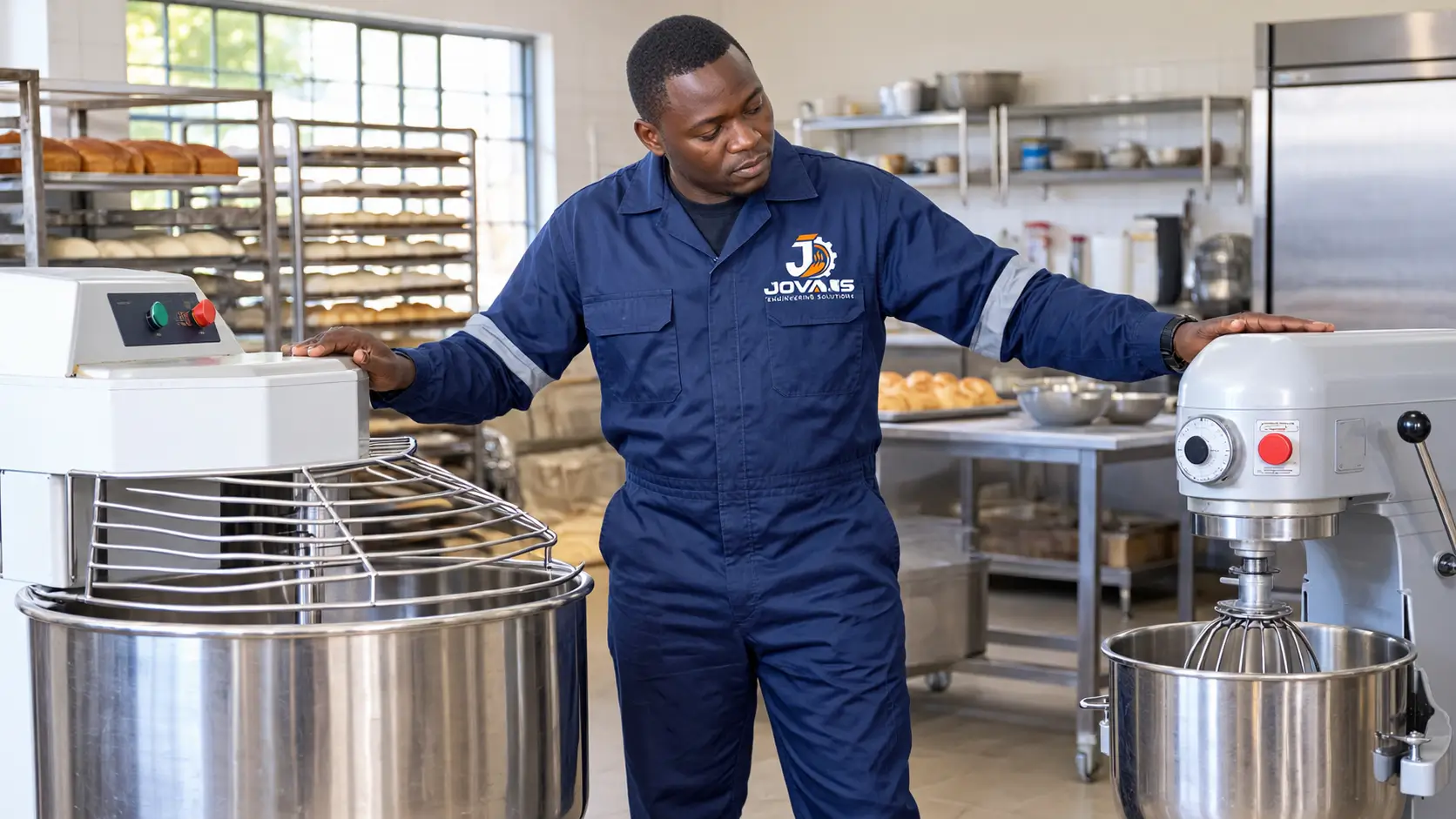
A spiral mixer and a planetary mixer solve the same basic problem, mixing dough or batter at commercial volume, using genuinely different mechanisms. A spiral mixer rotates the bowl itself against a fixed or slowly turning spiral-shaped hook, a design built specifically for heavy bread dough. A planetary mixer keeps the bowl still and moves the attachment, whisk, paddle, or hook, in a planetary orbit around the bowl, which makes it more versatile across batters, creams, and lighter doughs but introduces more moving parts in the process.
That mechanical difference is exactly why spiral mixer vs planetary mixer fault patterns don’t match. A bakery running both machines side by side will usually find each one develops its own characteristic problems rather than sharing a single common failure point, which is worth understanding before you’re trying to diagnose one over the phone.
Common Spiral Mixer Faults
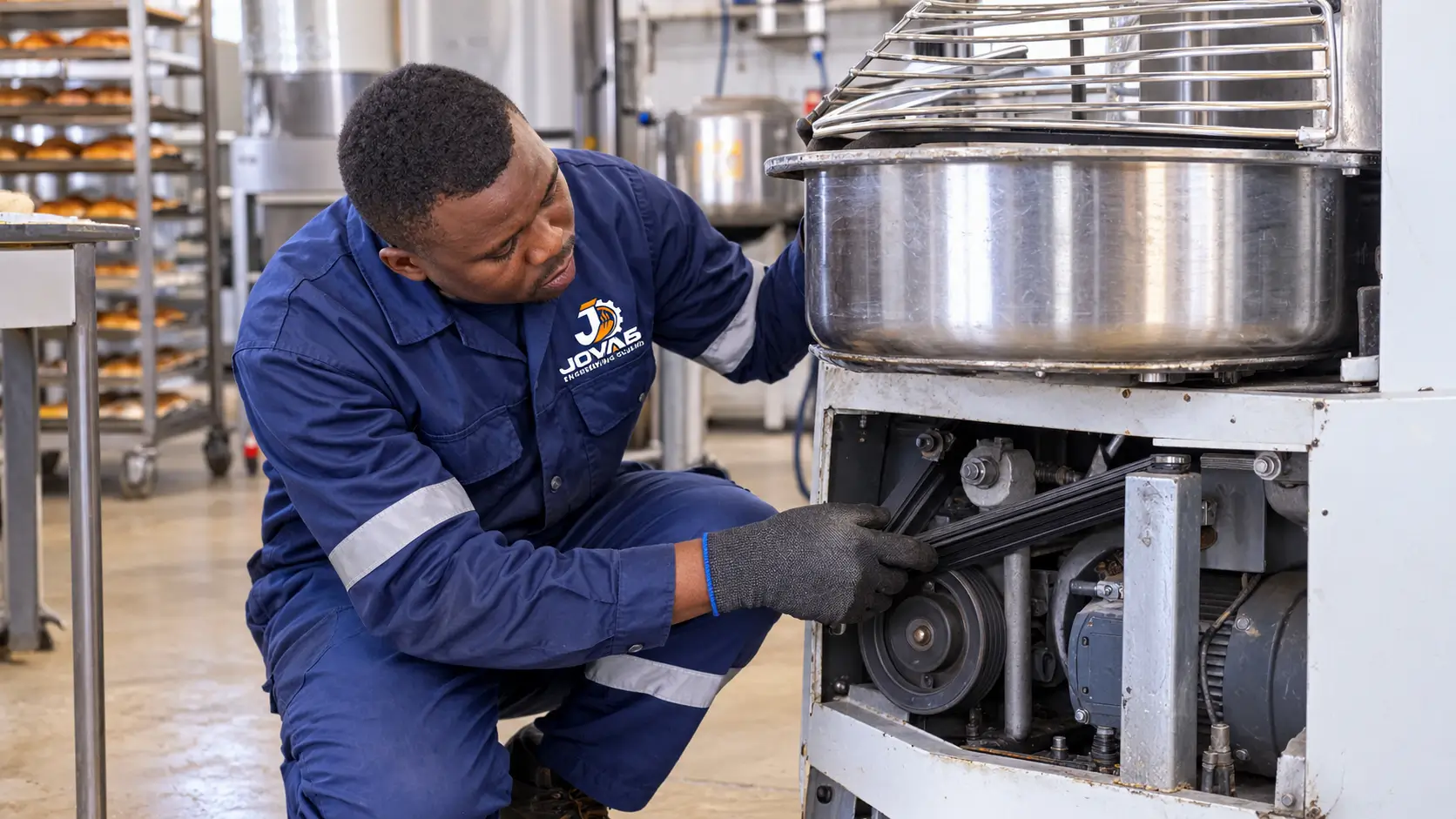
Because a spiral mixer’s bowl itself rotates, often against a heavy, resistant mass of dough, the bowl drive system takes the most punishment. A slipping or worn bowl drive belt is one of the most common spiral mixer faults, usually showing up as the bowl rotating slower than it should or stalling under a full batch. The spiral hook’s own drive, separate from the bowl drive on most models, can develop similar belt or gear wear. Motor strain is also more common on spiral mixers specifically, since stiff, high-hydration dough puts sustained load on the motor in a way lighter batters don’t, which is why an underpowered or ageing spiral mixer motor tends to show heat and performance issues sooner than the same motor would in lighter-duty use.
Common Planetary Mixer Faults
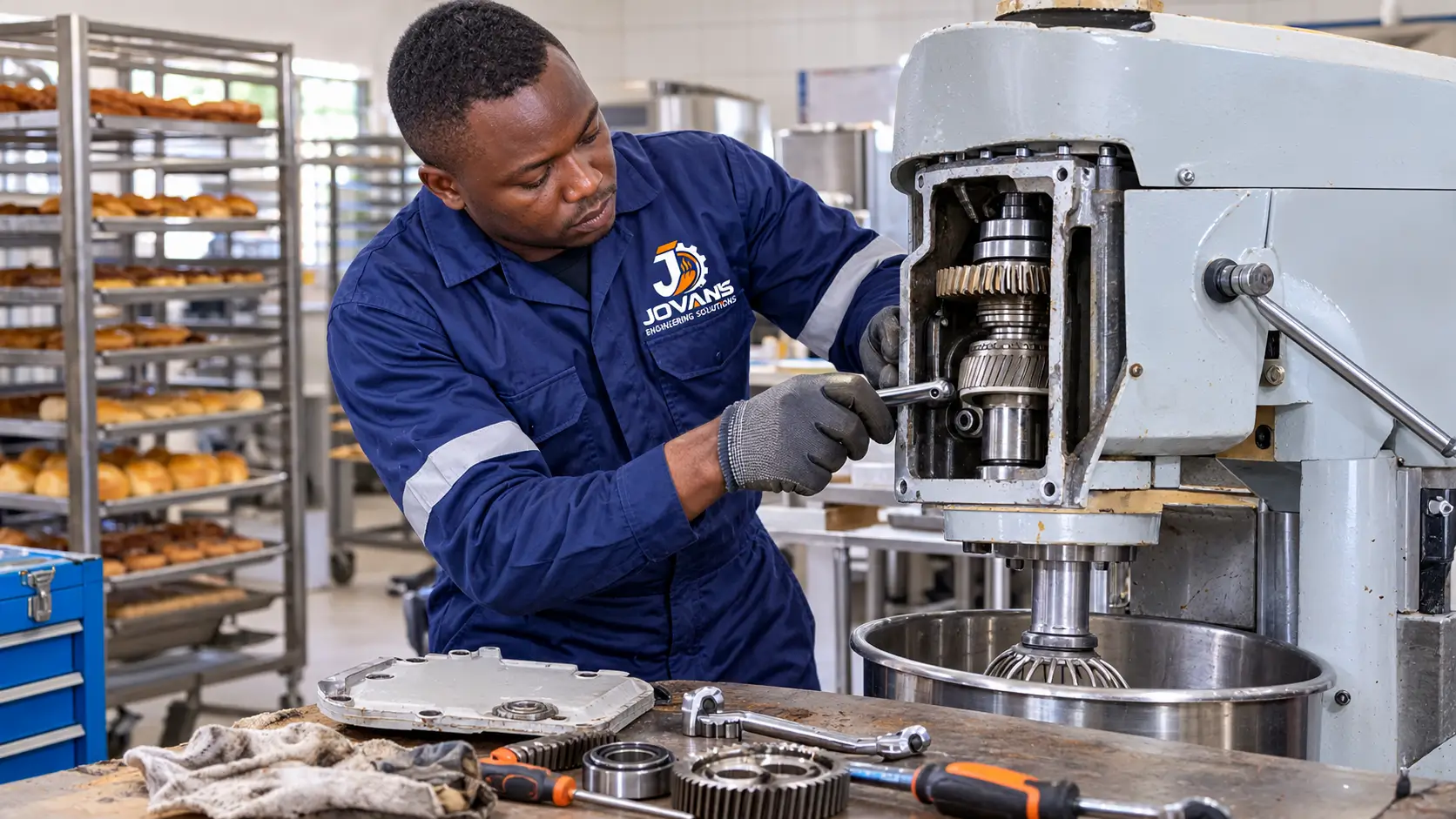
A planetary mixer’s added mechanical complexity, the gearbox that drives the planetary orbit motion, is where most of its faults concentrate. Gearbox wear is the defining planetary mixer fault, since the gears themselves take on the mechanical load a spiral mixer’s simpler drive system doesn’t need. A worn or damaged attachment hub is another common issue, since planetary mixers rely on swapping between whisk, paddle, and hook attachments, and repeated attachment changes wear the hub coupling over time. Planetary mixers also tend to show more electrical faults tied to multi-speed control systems, since offering several mixing speeds adds more switching components than a spiral mixer’s simpler single-speed design typically has.
Beyond their distinct mechanical faults, spiral and planetary mixers share the same general motor and electrical wear points as any other bakery equipment motor, the grinding, whining, and humming patterns covered in our guide to strange bakery equipment noises apply equally to both. Bearing wear, capacitor failure, and general motor ageing don’t discriminate by mixer type, and our broader guide to dough mixer motor warning signs covers these shared faults in more depth.
Spiral Mixer Vs Planetary Mixer: Which Breaks Down More Often?
Neither type is inherently more reliable, they’re built for different jobs and stressed in different ways. A spiral mixer working within its intended dough range tends to be mechanically simple and robust, but pushing it beyond its rated capacity accelerates bowl drive and motor wear quickly. A planetary mixer’s added versatility comes with more components that can individually fail, gearbox, attachment hub, multi-speed controls, even though each component may be lightly loaded compared to a spiral mixer’s dough resistance. In practice, the mixer that breaks down more often is usually the one being used outside its intended purpose, a planetary mixer pushed to handle heavy bread dough, or a spiral mixer’s bowl drive strained by batches too large for its rated capacity.
Spiral Vs Planetary Mixer Fault Quick Reference
The table below summarizes the fault patterns most specific to each mixer type, based on what our technicians see across spiral mixer vs planetary mixer callouts in Kenyan bakeries.
| Fault | Spiral mixer | Planetary mixer |
|---|---|---|
| Bowl or drive slowing under load | Common, bowl drive belt wear | Uncommon, bowl is stationary |
| Gearbox wear | Less common | Common, defining fault of this type |
| Attachment coupling wear | Not applicable, fixed hook | Common with frequent attachment swaps |
| Motor strain under heavy load | Common with high-hydration dough | Less common in typical use |
| Multi-speed control faults | Rare, simpler drive system | Common, more switching components |
| General bearing and capacitor wear | Shared | Shared |
What To Check Yourself, And What Needs A Technician
Listening for unusual sounds, noting whether a fault appears only under heavy load, and checking whether an issue is specific to one attachment on a planetary mixer are all safe to observe yourself. Opening a gearbox, replacing a bowl drive belt, or working on internal electrical components should always go to a professional, since misdiagnosing a spiral mixer fault as a planetary one, or vice versa, wastes both time and money given how different the underlying repairs are.
Mixer Acting Up?
Whatever the spiral mixer vs planetary mixer issue turns out to be, our technicians diagnose the specific mechanism at fault before quoting any repair. If your mixer needs attention now, book a visit or reach out directly.
Frequently Asked Questions
What’s the most common spiral mixer fault?
A slipping or worn bowl drive belt, since the bowl itself rotates against the resistance of the dough, putting sustained strain on that specific component.
What’s the most common planetary mixer fault?
Gearbox wear, since the gearbox drives the planetary orbit motion that defines this mixer type and takes on mechanical load a spiral mixer’s simpler drive doesn’t have.
Is a planetary mixer less reliable than a spiral mixer?
Not inherently, it simply has more components that can individually fail due to its added versatility. Reliability in practice usually comes down to whether the machine is being used within its intended capacity.
Can a planetary mixer be used for heavy bread dough instead of a spiral mixer?
It can, but pushing a planetary mixer beyond its intended range accelerates gearbox and motor wear, since it wasn’t designed for the same sustained dough resistance a spiral mixer handles.
In the spiral mixer vs planetary mixer comparison, do they share any of the same faults?
Yes, general motor bearing wear, capacitor failure, and electrical ageing affect both types similarly. It’s the mixer-specific mechanical faults, bowl drive versus gearbox, that differ between them.