
Troubleshooting Guide
Dough mixer repair Kenya guide: the 5 warning signs your mixer motor is about to fail, what you can safely check yourself, and when to call a technician before it stops mid-batch.
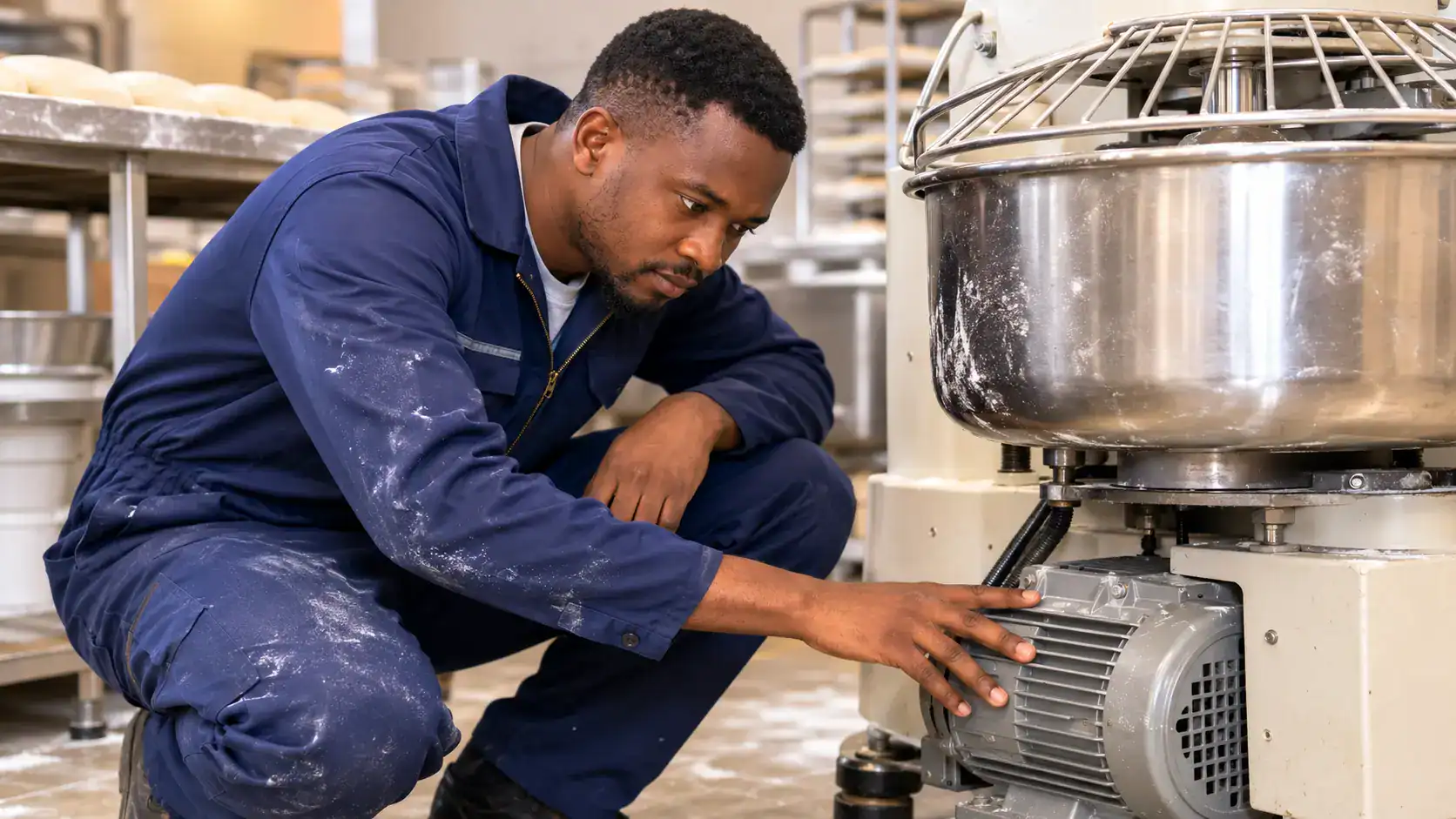
A dough mixer motor rarely fails without warning. In almost every case, it gives you days or weeks of signals first: a new sound, a burning smell, a breaker that trips more often than it used to, before it finally seizes mid-batch and takes your production schedule down with it. Knowing what those warning signs are, and which ones mean “shut it down now” versus “book a visit this week,” is the difference between a planned dough mixer repair Kenya bakeries can schedule around, and an emergency callout in the middle of a busy production run.
This guide walks through the five most common warning signs our technicians see before a mixer motor fails completely, what is actually happening inside the motor at each stage, how to check for it safely, and when a sign means you should stop using the machine immediately rather than finish the batch. If you run a commercial kitchen or bakery, this is the same diagnostic checklist our team works through on every dough mixer repair Kenya callout involving a motor complaint.
Why Mixer Motors Fail Gradually, Not Suddenly
Commercial dough mixers put real strain on their motors. Stiff, high-hydration, or cold dough creates heavy resistance, and the motor has to work against that load for extended periods, often multiple times a day in a busy bakery. Over time this causes predictable wear: bearings lose lubrication and develop play, windings heat and cool repeatedly until insulation breaks down, brushes wear thin on older motor types, and capacitors weaken on single-phase units. Each of these failure paths produces a specific, recognizable symptom well before the motor actually dies, which is exactly why catching the early signs matters so much for any dough mixer repair Kenya bakeries want to keep affordable and non-urgent.
1. Unusual Noise: Grinding, Whining, Or Humming
A healthy mixer motor runs with a fairly consistent, low hum. A new grinding or rattling sound almost always points to worn bearings, which are no longer holding the motor shaft in smooth alignment. A high-pitched whine that changes with mixer speed often indicates belt or pulley wear rather than the motor itself, while a loud hum with little rotation suggests the motor is struggling to turn against resistance it can’t overcome, which is common when a capacitor is failing.
Bearing replacement and belt adjustment are both routine bakery equipment repair jobs, and catching this stage early usually means a same-visit fix rather than a full motor rebuild. This is one of the most common calls we get for dough mixer repair Kenya wide, precisely because the noise is easy to notice but easy to keep ignoring until it gets worse.
2. A Burning Smell Or Warm-To-The-Touch Motor Housing
Heat is the clearest sign that a motor is working harder than it should. Insulation breakdown inside the windings causes internal resistance to rise, which generates heat, which further degrades the insulation, in a cycle that accelerates fast once it starts. A faint burning or “hot electrical” smell, or a motor housing that is uncomfortably warm to the touch after normal use, means the motor is heating well past its intended operating range.
This is not a DIY repair. Overheating windings involve internal electrical components and, in some cases, the early stages of an insulation fire risk, so this always needs a qualified technician rather than a guess-and-check approach. Kenya’s Kenya Bureau of Standards (KEBS) electrical testing standards exist precisely because overheating electrical equipment is a recognised fire and safety hazard, not just a performance issue, which is why any technician handling a dough mixer repair Kenya bakeries trust should treat a hot motor as urgent rather than routine.
3. The Circuit Breaker Trips More Than It Used To
An occasional trip during a particularly heavy dough load can be normal. A breaker that has started tripping regularly, especially at points in the cycle where it never used to, usually means the motor is drawing more current than it should. This can be caused by worn bearings creating extra mechanical resistance, a failing capacitor forcing the motor to draw higher startup current, or early-stage winding damage increasing electrical resistance inside the motor itself.
Repeated tripping is your electrical system protecting itself, and resetting it over and over without addressing the underlying cause is one of the fastest ways to turn a moderate mixer motor repair into a full motor replacement. This is a routine diagnostic step in most dough mixer repair Kenya visits, since the tripping pattern alone often narrows down the likely fault before the technician even opens the housing.
4. The Mixer Slows Down Or Stalls Under Normal Loads
If your mixer used to handle a standard batch without hesitation and now bogs down, slows noticeably, or stalls on doughs it previously managed fine, the motor is losing torque. This is commonly caused by worn brushes on brushed motor types, a weakening capacitor reducing running power on single-phase motors, or a slipping drive belt that is no longer transferring full motor power to the bowl.
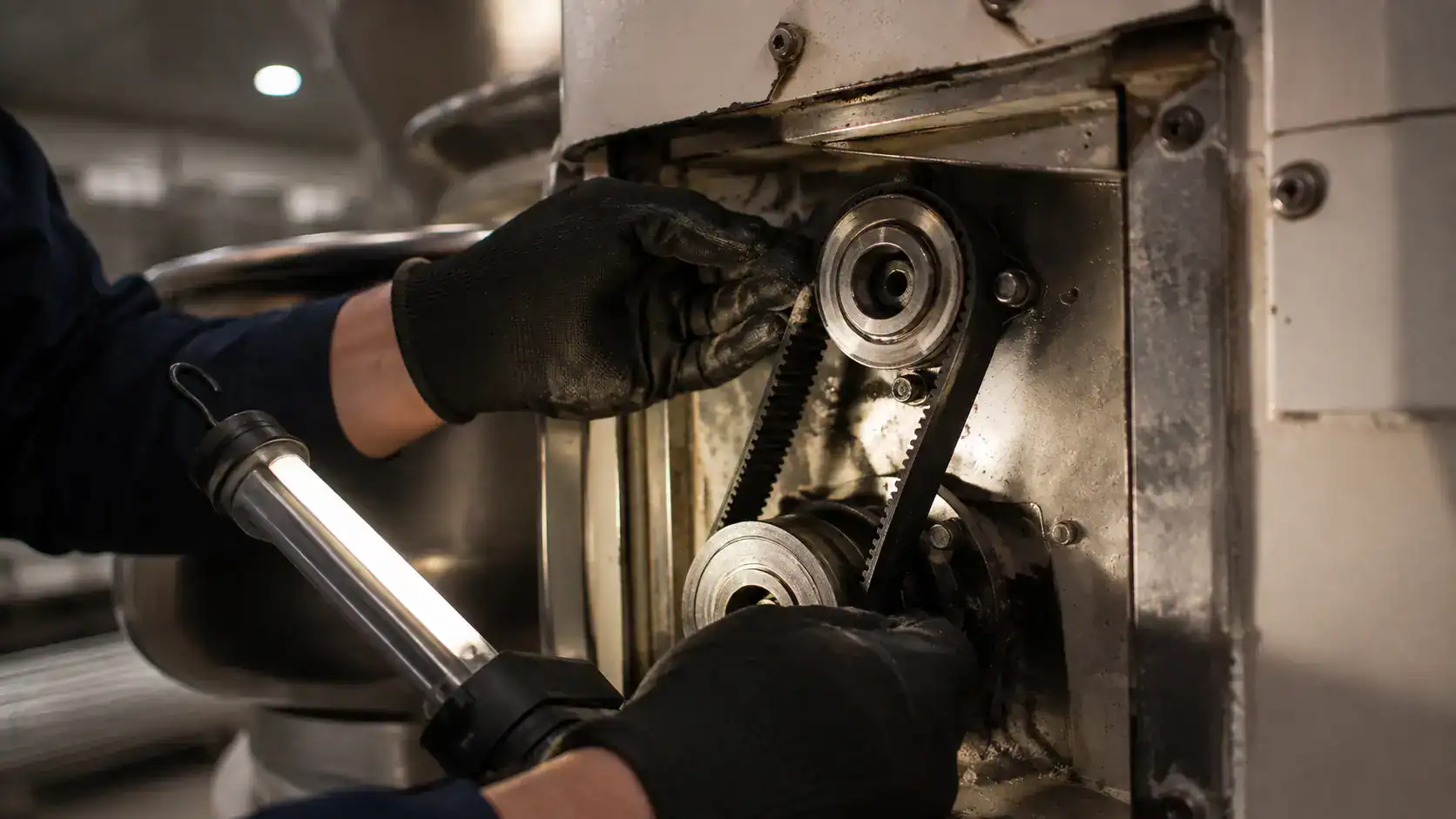
Loss of power rarely fixes itself and typically gets worse batch by batch, since the underlying wear continues regardless of how carefully you use the machine afterward. Left unaddressed, a slowing motor often ends in a full stall mid-mix, which is a far more disruptive and urgent version of the same bakery equipment repair that would have been straightforward a few weeks earlier.
5. Visible Sparking, Scorch Marks, Or Unusual Vibration
This is the most serious warning sign on this list and should never be treated as routine wear. Sparking near the motor housing or power connections, visible scorch or discoloration marks on the housing or cabling, or a new, strong vibration that shakes the whole unit rather than just the bowl, all indicate the motor is close to complete failure or has already developed a genuine electrical safety hazard.
Any of these signs mean the motor should be taken out of service immediately, not scheduled for “whenever it’s convenient.” This is one of the few situations in commercial kitchen equipment where continuing to use the machine risks real injury or fire, not just a bigger repair bill, and it is treated as an emergency dough mixer repair Kenya callout whenever a bakery reports it to us.
Quick Reference Table
The table below maps each warning sign to its most likely cause and how urgently it should be addressed, based on the diagnostic pattern our technicians use on every dough mixer repair Kenya visit.
| What you’re noticing | Most likely cause | Urgency |
|---|---|---|
| Grinding or knocking noise from the motor | Worn bearings | Book a visit soon |
| High-pitched whine near the belt | Belt or pulley wear | Book a visit soon |
| Burning smell or hot motor housing | Insulation breakdown / overheating windings | Stop use, call now |
| Breaker trips more often than before | Capacitor fault, bearing resistance, or winding damage | Book a visit soon |
| Mixer slows or stalls under normal loads | Worn brushes, weak capacitor, or slipping belt | Book a visit soon |
| Sparking, scorch marks, or strong new vibration | Imminent motor failure / electrical hazard | Stop use, call now |
The Real Cost Of Waiting
A mixer motor that is starting to fail rarely fails at a convenient time. It carries a compounding cost that is easy to underestimate while the machine is still technically working. Wasted dough and missed batches pile up the moment the motor actually stalls mid-mix, often with product already inside the bowl. Emergency callout costs are typically higher than a scheduled visit, since urgent dispatch and after-hours work carry a premium most routine repairs do not. A full motor replacement, once bearings, windings, and capacitor have all degraded together, costs significantly more than catching any single one of these issues early. Production downtime affects every order behind the one you were mixing when it failed, which is often the most expensive part of all. This is why most established bakeries treat mixer motor warning signs as a scheduling decision rather than something to wait out, since an early dough mixer repair Kenya visit is almost always cheaper than the breakdown it prevents.
When To DIY Versus When To Call A Technician
It is safe to listen for noise changes, check for warmth by hand after use, note breaker-tripping patterns, and watch for changes in mixing speed or power yourself, without opening the machine. Anything involving the motor housing, internal wiring, capacitors, windings, or any sign of sparking, scorching, or burning smell should always go to a professional. Motors carry real electrical risk, and a mixer that is drawing excess current or has damaged insulation is not something to open up without the right isolation procedure and testing equipment. When in doubt, a short dough mixer repair Kenya assessment is far cheaper than a mistake, and a qualified bakery equipment technician can often tell you over the phone whether what you’re hearing or smelling needs an urgent visit or can wait for a scheduled one.
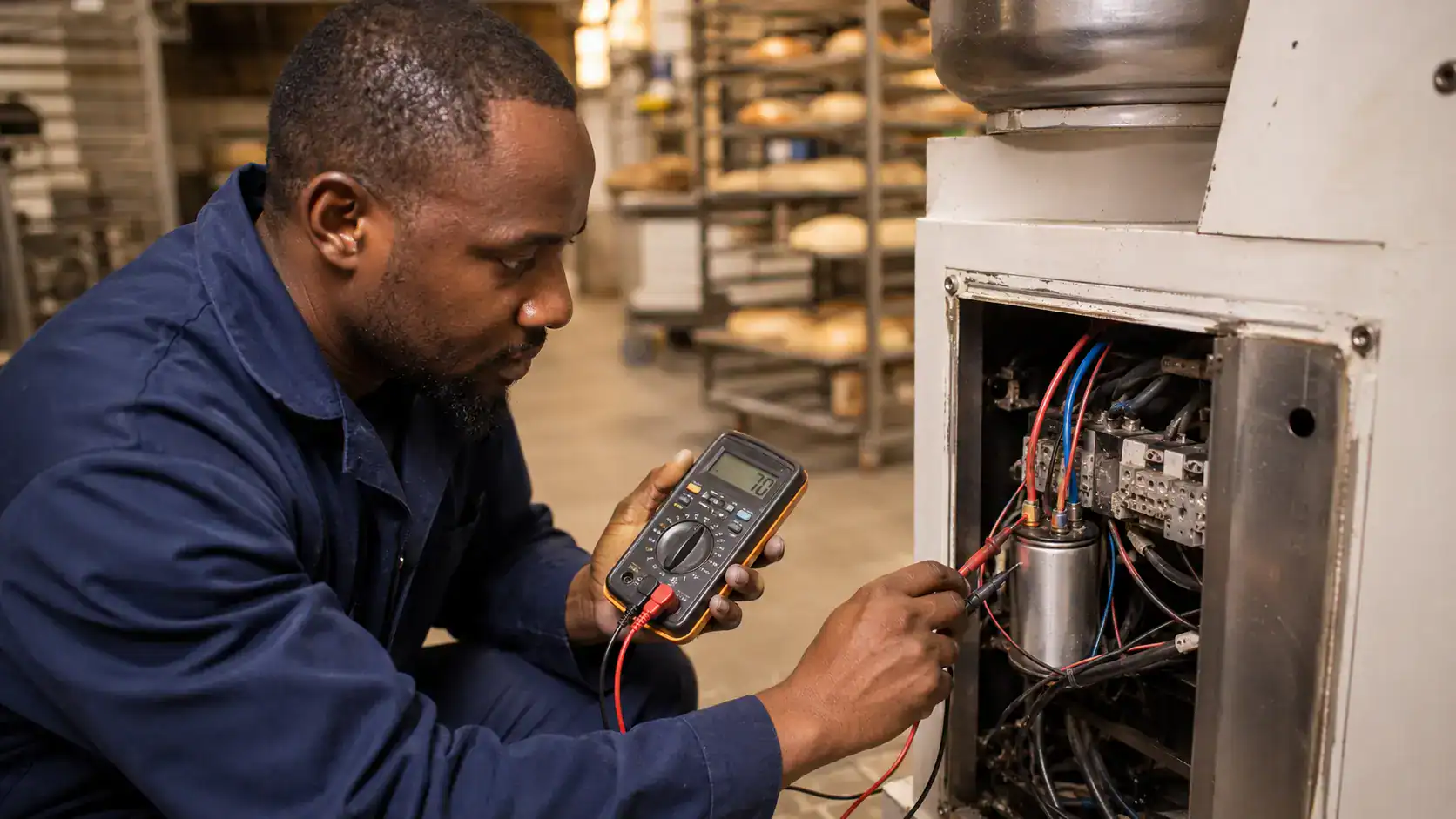
Don’t Wait For It To Stall Mid-Batch
Our technicians handle dough mixer repair Kenya wide, from spiral and planetary mixers to large-capacity commercial models, across bakeries of every size, and every visit follows the same diagnostic process outlined above. If your mixer is making new noises, running hot, tripping breakers, or losing power, our emergency repair service gets a technician to you fast, or you can book a standard equipment repair visit if the issue is not urgent yet. We also offer scheduled preventive maintenance plans that catch bearing and belt wear before it turns into a motor replacement.
Frequently Asked Questions
Can I keep using my mixer if it’s just making a bit more noise than usual?
You can usually keep using it briefly while you book a visit, but new noise means active wear is happening, and it typically gets worse with continued use rather than staying stable, so most bakers book a dough mixer repair Kenya technician as soon as they notice a change rather than waiting for it to get louder.
How long does a typical mixer motor repair take?
Bearing replacement and belt adjustments can often be done in a single visit if the technician carries the right parts for your model. A full motor rebuild or replacement may need a follow-up visit depending on parts availability, but our technicians carry commonly needed parts for most standard commercial mixer models used across Kenyan bakeries.
Is it worth repairing an old mixer motor, or should I replace the whole unit?
It depends on the age and condition of the mixer overall and which specific fault you’re dealing with, which is exactly the kind of question worth getting an honest dough mixer repair Kenya assessment on rather than assuming either way.
How much does a dough mixer motor repair in Kenya typically cost?
Pricing depends on the specific fault, but bearing, belt, and capacitor repairs are far cheaper than a full motor replacement, which is why an early diagnostic visit usually pays for itself.
Do you offer emergency callouts if a mixer stops working completely?
Yes. Our emergency repair line is available for bakeries that cannot afford downtime, and a bakery equipment technician can usually reach you the same day within our service areas for any dough mixer repair Kenya wide.
What should I do right now if I smell burning from my mixer?
Switch the mixer off, unplug it at the wall, and do not use it again until a technician has inspected it. A burning smell means the motor is already overheating internally, and continuing to run it risks turning a repairable fault into a safety hazard.