
Troubleshooting Guide
A gas oven repair Kenya diagnostic guide: why a gas oven won’t light, which checks are safe to do yourself, and when to call a technician.
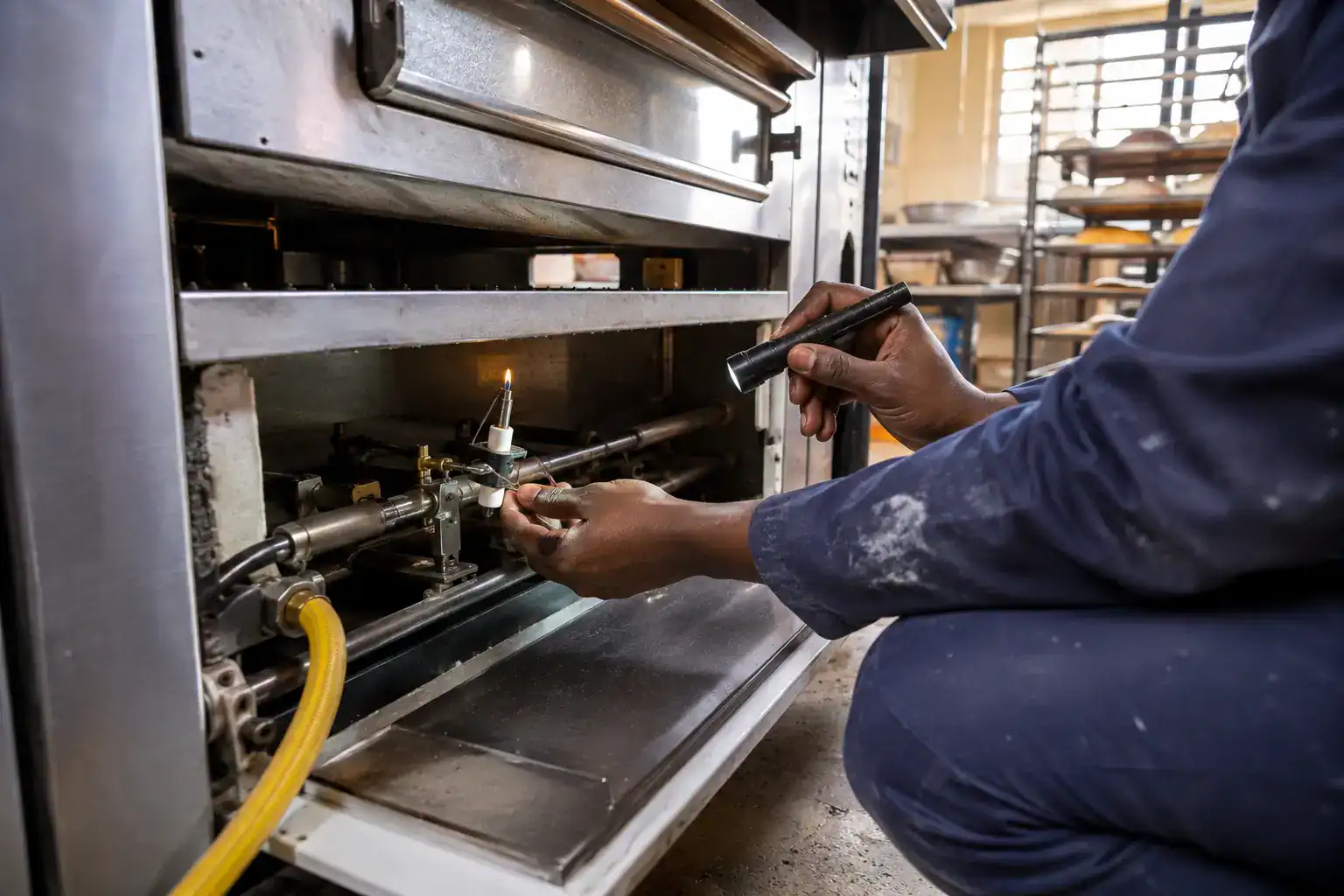
When a commercial gas oven won’t light, bakeries lose production time fast, and the instinct is often to keep clicking the switch and hope. That is understandable under order deadlines, but it is also how a small fault turns into a bigger one. If you are asking why won’t my gas oven light mid-shift, the cause almost always falls into one of three categories: no gas reaching the burner, no spark or flame at the igniter, or a safety sensor correctly cutting the gas because it didn’t detect a flame. This guide covers what a gas oven repair Kenya technician checks first, what’s safe to check yourself, and what should be left to a professional.
How Gas Ignition Is Supposed To Work
Understanding why a gas oven won’t light starts with knowing what has to happen correctly for it to light at all. Gas has to reach the burner at the correct pressure. An ignition source, either a standing pilot or an electric spark igniter, has to fire at that exact moment. And a flame sensor, usually a thermocouple, thermopile, or flame rectification rod, has to confirm a flame is burning within a few seconds, or the safety valve shuts the gas off. Almost every case where a gas oven won’t light comes down to a breakdown in one of these three stages, which is the same sequence our technicians run through on every gas oven repair Kenya callout.
1. No Gas Reaching The Burner
A gas oven won’t light for this reason more than any other: if the burner simply isn’t getting fuel, nothing will light regardless of igniter or pilot condition. An empty or near-empty LPG cylinder is the most common cause on bottled gas, and it’s easy to overlook when a cylinder still has some weight to it. A partially closed valve, sometimes bumped during cleaning, is another frequent culprit. On mains-fed systems, a supply interruption affects the whole kitchen at once, which is a useful clue if other gas appliances have also stopped.
2. A Gas Oven Igniter Not Working, Or A Pilot That Won’t Stay Lit
On electronic ignition ovens, a weak or dead spark igniter won’t produce enough spark to light the gas, even though gas is flowing freely. On standing pilot ovens, drafts, a partially blocked orifice, or weak gas flow can extinguish the pilot flame that’s meant to stay lit continuously. Igniter electrodes corrode from repeated sparking, and pilot orifices accumulate flour dust and residue over time, distorting the flame until it goes out.
Relighting a pilot once or twice using the manufacturer’s printed instructions is generally safe. If it won’t stay lit after that, stop and book a bakery equipment repair visit rather than repeating the attempt.
3. A Weak Or Failed Flame Sensor
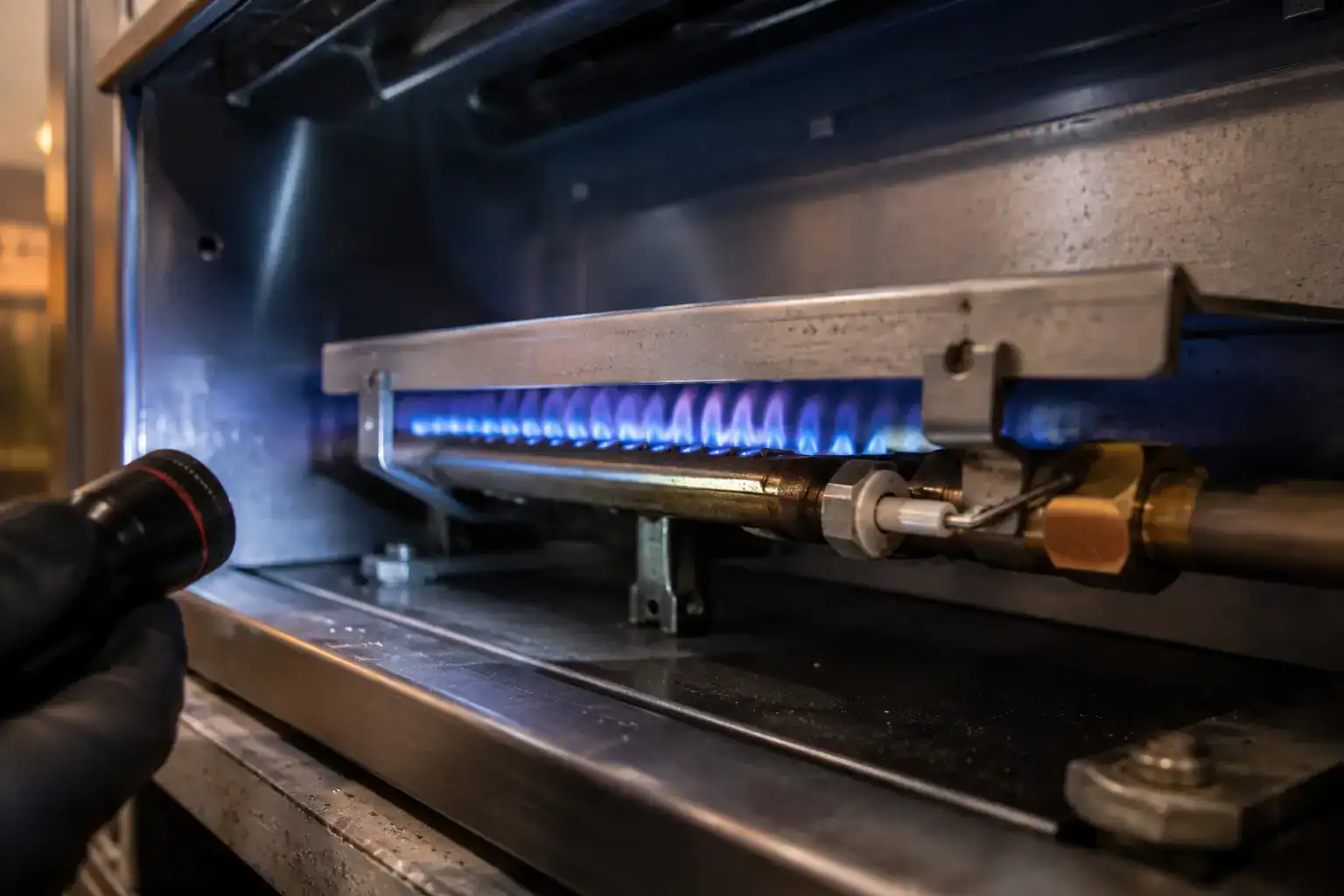
A gas oven won’t light for this reason more often than people expect, even when gas and ignition both seem fine. If the sensor doesn’t detect heat quickly enough, the safety valve cuts the gas, and the burner catches briefly before shutting off again. These sensors sit directly in the flame path, so they wear from the same thermal cycling that degrades burners and igniters. A sensor tip that has simply drifted out of position can cause the exact same symptom without being faulty at all.
4. A Faulty Gas Valve Or Safety Valve
If a gas oven won’t light despite good supply, a working igniter, and a healthy pilot, the valve is usually the next suspect. It controls flow to the burner and pilot and often houses the safety shutoff. A mechanically or electronically failed valve can block gas entirely, or trigger the safety shutoff prematurely even when the rest of the ignition chain is fine.
There’s little to check here without gas-specific test equipment. If supply, igniter, and pilot have all been ruled out, a valve fault is the likely remaining cause, and it’s never a DIY repair.
5. Blocked Or Distorted Burner Ports
Sometimes a gas oven won’t light consistently rather than not lighting at all, and burner ports are the usual reason. Grease, flour dust, or carbon residue can build up gradually, distorting the flame pattern enough that ignition struggles to catch or the sensor can’t register a strong enough flame in time.
Quick Reference Table
| What you’re seeing | Most likely cause |
|---|---|
| Nothing at all, no smell, no click | No gas reaching the burner |
| Faint gas smell, no spark or click | Failed or weak igniter |
| Pilot won’t stay lit after relighting | Pilot orifice blockage or weak gas flow |
| Burner catches briefly, then shuts off | Flame sensor fault |
| Everything checks out but it still won’t light | Gas valve or control fault |
| Takes several attempts, weak flame once lit | Blocked burner ports |
The Real Cost Of Waiting
A gas oven won’t light forever without consequence, and an oven that won’t light reliably rarely improves on its own. Every failed attempt costs production time, especially during peak hours. Repeated relighting stresses igniters and safety valves that are already struggling, often turning a minor fault into a full component replacement. Failed ignitions also waste gas, particularly on standing pilot systems. Most seriously, a gas oven won’t light for a reason, and that reason is sometimes a safety system correctly preventing unsafe ignition — never something to work around rather than properly diagnose.
When To DIY Versus When To Call A Technician
Not every reason a gas oven won’t light needs a professional visit right away. It’s safe to check gas supply and valve position, confirm whether other gas appliances are affected, listen for igniter clicking, check a pilot flame visually, and follow printed relighting instructions once or twice. Igniter replacement, flame sensor work, gas valve or control repairs, and burner port cleaning should always go to a professional. Gas systems carry real safety risks that other oven faults don’t, so this isn’t an area for trial and error. When in doubt, a short assessment is far cheaper and safer than working around the problem yourself.
Get It Fixed Fast
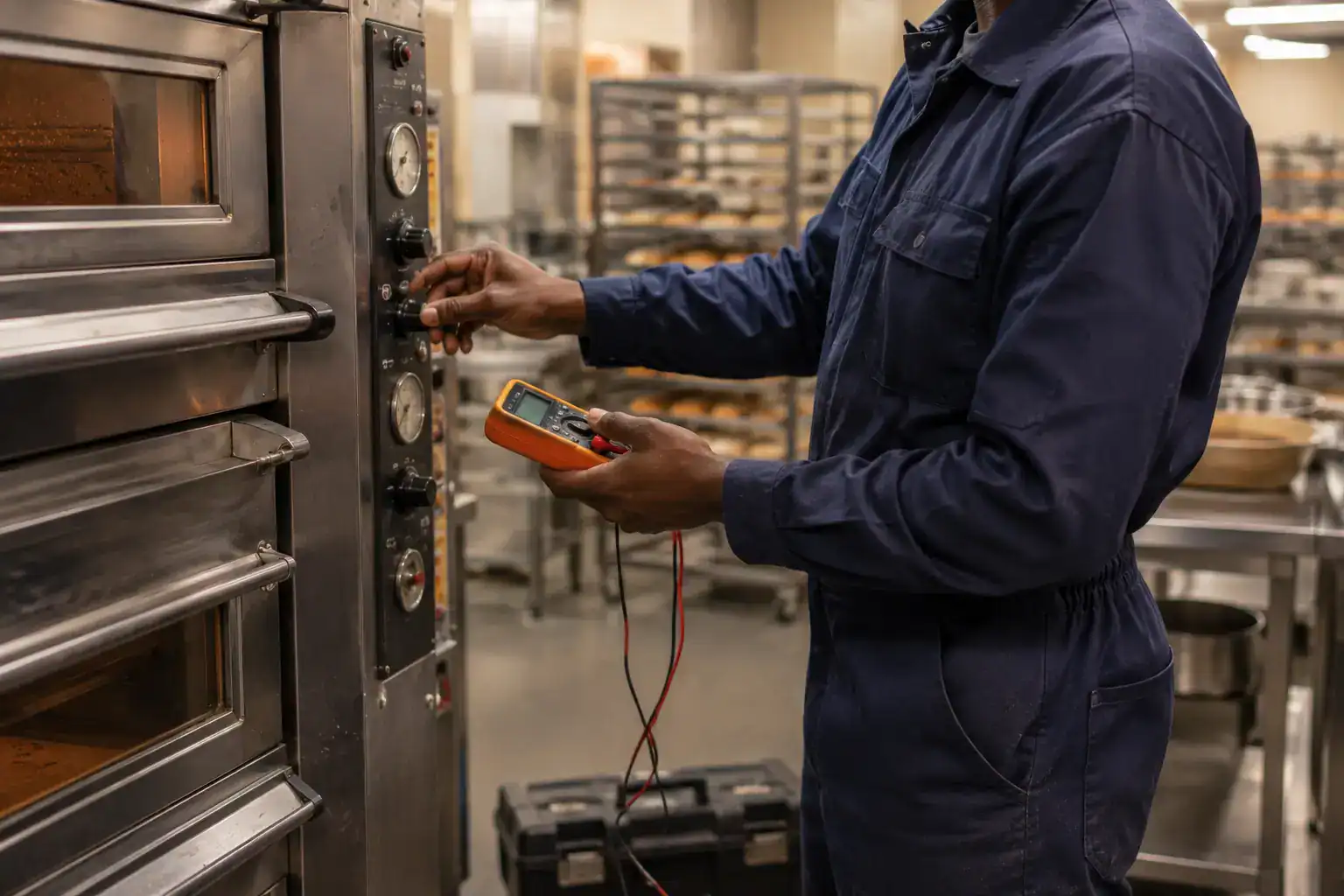
Our technicians handle gas oven repair Kenya wide, from standing pilot deck ovens to electronic ignition rotary and convection models. Whatever the cause, when a gas oven won’t light our emergency repair service gets a technician to you fast, or book a standard visit if it’s not urgent.
Frequently Asked Questions
What are the most common reasons a gas oven won’t light?
Usually one of five things: no gas reaching the burner, a weak or dead igniter, a pilot that keeps going out, a flame sensor not detecting heat fast enough, or blocked burner ports. The same checklist applies whether you call it a gas oven not igniting or a gas oven that won’t ignite at all.
My gas oven won’t ignite at all — where should I start?
Confirm gas supply and valve position first, then listen for the igniter clicking. No click and no gas smell usually points to a supply issue; no click or glow at all points to a gas oven igniter not working, rather than the gas line.
Is it dangerous to keep trying to light a gas oven that won’t catch?
Repeated attempts can allow unburned gas to build up and stresses igniters and safety valves. It’s safer to stop, ventilate, and call a technician rather than continuing to attempt ignition.
Why does the burner light and then go out again?
This pattern almost always points to the flame sensor not detecting the flame quickly enough, triggering the built-in safety shutoff.
Do you offer emergency callouts if my gas oven suddenly stops lighting?
Yes. Our emergency repair line is available for bakeries that can’t afford downtime, with a technician usually able to reach you the same day within our service areas.
What areas do you cover for gas oven repair Kenya callouts?
We serve bakeries across Nairobi and the surrounding counties, dispatching from the nearest available team for both scheduled visits and emergencies.