
Troubleshooting Guide
Bread slicer repair Kenya guide: the most common reasons a slicer jams or tears loaves instead of cutting cleanly, what you can check yourself, and when to call a technician.
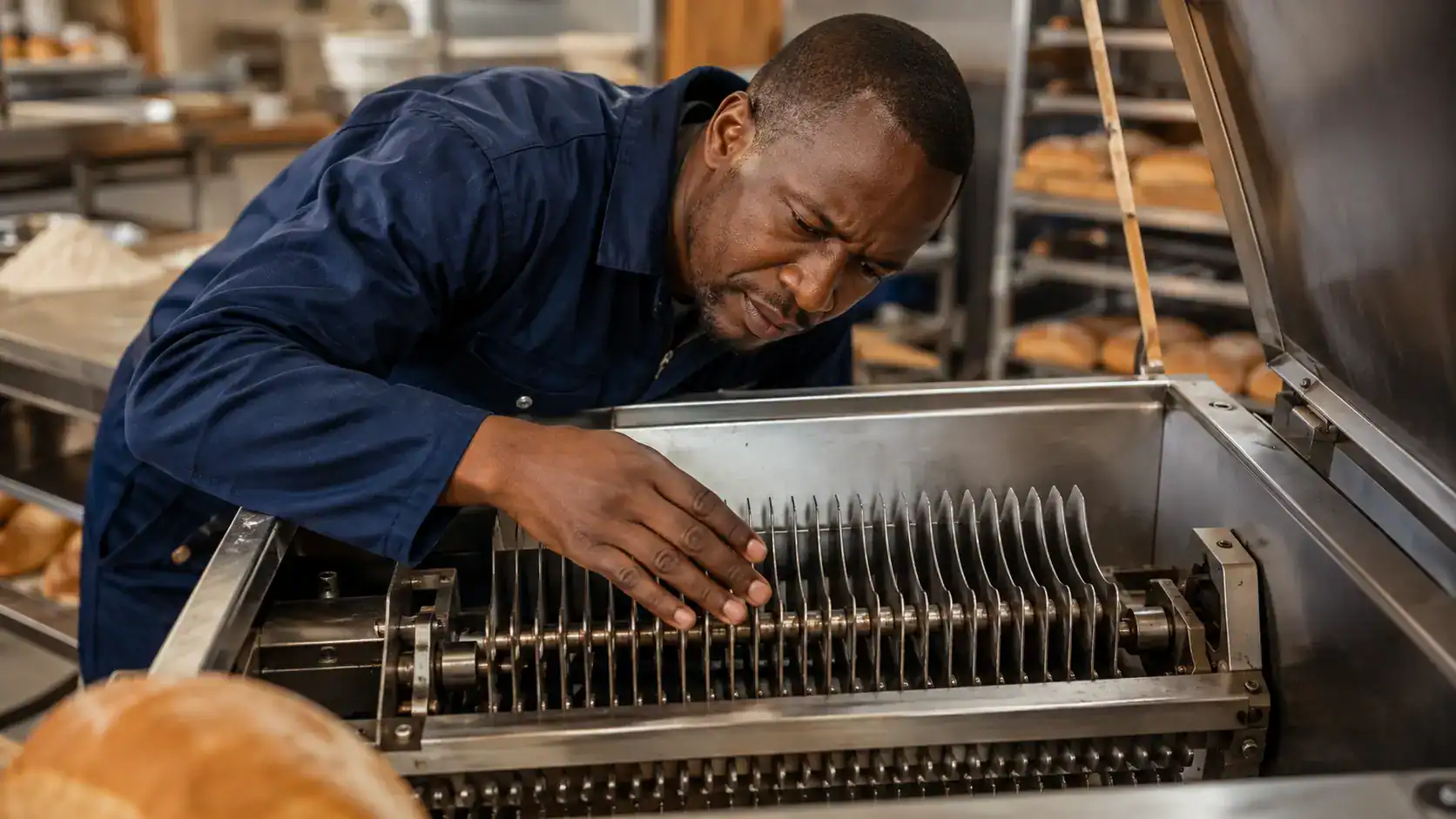
A bread slicer that jams mid-loaf or tears bread instead of cutting it cleanly is one of the most disruptive small failures in a bakery, because it doesn’t just slow you down, it wastes the loaf you were slicing and often the one behind it too. Most of the time the cause is mechanical and fairly predictable, which is good news: it usually means a straightforward bread slicer repair Kenya bakeries can get sorted in a single visit, rather than a sign the whole machine needs replacing. This guide walks through the causes we see most often, what is actually happening inside the machine in each case, what you can safely check yourself, and when the fix needs a qualified technician rather than a screwdriver and a guess.
Torn, ragged, or squashed slices are not just a cosmetic problem either. Inconsistent slices affect packaging, shelf appeal, and customer perception of quality just as much as an oven or mixer fault would, which is exactly why bread slicer repair Kenya bakeries book with us so often comes down to one of the five causes below.
How A Bread Slicer Is Supposed To Cut Cleanly
A commercial bread slicer relies on several things working together at once. A bank of reciprocating or oscillating blades needs to be sharp and correctly tensioned to shear through the crust and crumb without dragging. A guide or comb mechanism holds the loaf steady and controls the gap between blades so every slice comes out an even thickness. A drive motor and belt need to move the blade bank at a consistent speed, since a slicer running too slowly tends to tear rather than cut. And the loaf itself needs to be within the size and firmness range the machine was set up for, since an oversized, underbaked, or still-warm loaf behaves very differently under the blades than a properly cooled one.
When bakers describe jamming or tearing, the fault almost always traces back to one of these four areas. Working through them in order is the same diagnostic approach our technicians use on every bread slicer repair Kenya visit, whether it’s a pin slicer, band slicer, or reciprocating blade model.
1. Dull Or Damaged Blades
This is by far the most common cause of tearing rather than clean cutting. Slicer blades are thin and only stay sharp for so long before repeated contact with crust, especially harder or seeded crusts, dulls the cutting edge. A dull blade doesn’t shear the bread cleanly, it drags and compresses it, which is why torn or ragged slices are usually a blade problem rather than a settings problem. Chipped or bent blades, often from a stray hard object caught in the loaf, cause a similar tearing pattern but usually only on specific slices rather than the whole loaf.
Blade sharpening and replacement are among the most routine bakery equipment repair jobs, and most technicians carry standard blade sets for common slicer models, which keeps this the fastest fix on this list. It is also the single most common call we get for bread slicer repair Kenya wide.
2. Crumb And Debris Buildup In The Blade Path
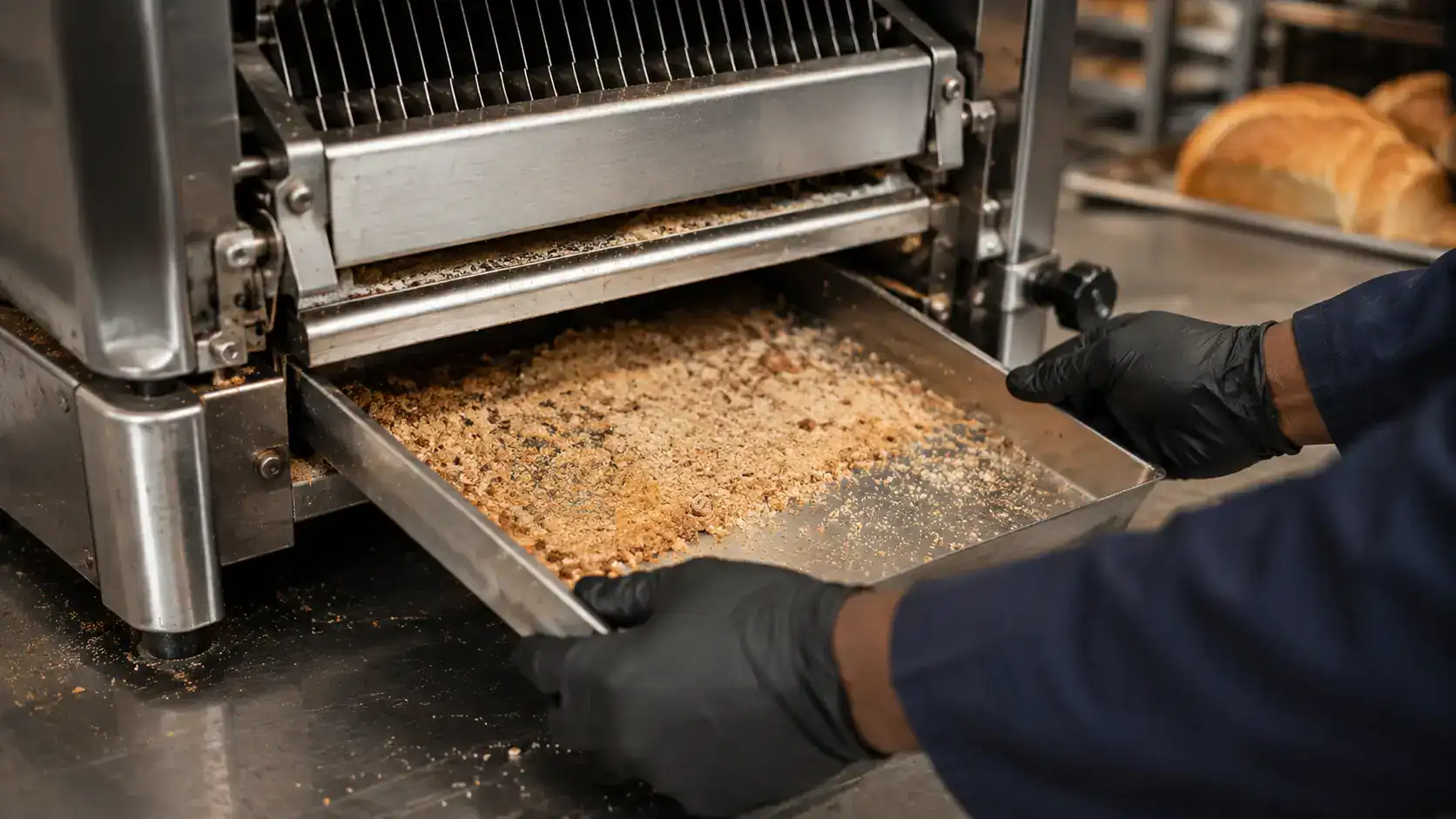
Bread slicers generate a lot of crumbs, and those crumbs don’t just fall harmlessly to the tray below. Over time they build up around the blade guides, gears, and drive mechanism, especially in machines that aren’t cleaned down thoroughly at the end of each shift. This buildup can physically obstruct blade movement, causing intermittent jamming that seems to happen “randomly” but is actually tied to how much debris has accumulated since the last clean.
Routine cleaning at the end of each shift prevents most of this entirely, and it is one of the easiest causes on this list to fix without calling anyone, provided the buildup hasn’t already damaged a component. If jamming continues after a thorough clean, the underlying mechanism likely needs professional inspection as part of a scheduled commercial equipment maintenance visit.
3. Guide Comb Or Loaf Carriage Misalignment
The guide comb, sometimes called the pusher plate or carriage, is what holds the loaf steady and moves it through the blade bank at a controlled pace. When this component is misaligned, bent, or has worn teeth, the loaf can shift slightly mid-slice, which causes uneven slice thickness at best and torn or wedge-shaped slices at worst. A carriage moving too fast or too slow relative to the blade oscillation speed produces a similar result, since the two need to be synchronized for a clean cut.
Realigning or replacing a guide comb usually requires opening the machine’s housing and adjusting components to the manufacturer’s tolerances, which is a job for a professional rather than a DIY attempt, since an incorrect adjustment can make the tearing worse or introduce a new jamming pattern entirely.
4. Loaf Size, Firmness, Or Temperature Outside The Machine’s Range
Not every jam or tear is a machine fault. Slicers are set up for a specific loaf size range, and a loaf that’s oversized, underproofed, or still warm from the oven behaves very differently under the blades than a properly sized, fully cooled one. Warm bread is soft and compresses rather than shears cleanly, which produces the same torn, squashed appearance as a dull blade, while an oversized loaf can jam the carriage mechanism outright if it doesn’t fit the guide properly.
This is the one cause on this list that often doesn’t need a technician at all, just an adjustment to cooling time or loaf sizing on the production side. It’s worth ruling out before booking a bread slicer repair Kenya visit, since it can save you a callout entirely.
5. Drive Belt Or Motor Faults Causing Inconsistent Blade Speed
If the blade bank isn’t moving at a consistent, correct speed, even sharp blades will struggle to cut cleanly. A worn or slipping drive belt causes the blades to run slower than intended, which tends to tear rather than shear the bread, especially through denser crumb or thicker crusts. A failing motor can produce a similar symptom, along with unusual noise, vibration, or the machine stalling partway through a loaf. Because slicer blades move at high speed near an operator’s hands, any fault involving the drive mechanism is also a safety-relevant repair, not just a quality one.
Belt and motor repairs on slicers involve moving parts near an exposed blade bank, so this is always a job for a qualified technician working with the machine properly isolated and guarded, in line with the machine safety standards enforced by Kenya’s Directorate of Occupational Safety and Health Services (DOSHS), which requires moving machinery in workplaces to be properly guarded and maintained.
Quick Reference Table
The table below maps the symptom you’re seeing to the most likely underlying cause, based on the diagnostic order described above, and mirrors the checklist our team runs through on every bread slicer repair Kenya visit.
| What you’re seeing | Most likely cause |
|---|---|
| Ragged, torn, or compressed slice edges on most loaves | Dull or damaged blades |
| Jamming that seems random or worsens through the shift | Crumb and debris buildup |
| Uneven slice thickness or a loaf shifting mid-cut | Guide comb or carriage misalignment |
| Tearing only on warm or oversized loaves | Loaf temperature or size, not a machine fault |
| Slower blade speed, stalling, or unusual motor noise | Drive belt or motor fault |
The Real Cost Of Waiting
A slicer that jams or tears loaves is not just a nuisance. Wasted loaves add up fast at commercial volumes, since a torn or crushed loaf usually can’t be sold at full price, if at all. Slower service during busy periods happens whenever staff have to stop and manually clear a jam or re-run a loaf, which costs time that’s hard to make back during peak hours. Customer-facing quality issues affect repeat business more than most bakery owners initially assume, since inconsistent slicing is one of the most visible signs of inconsistency to a customer. And a mechanical fault left unaddressed, particularly a blade or drive issue, tends to get worse rather than resolve itself, often failing completely during a high-volume period. This is why most bakeries treat a slicer jamming or tearing loaves as worth addressing quickly, since an early bread slicer repair Kenya visit is almost always cheaper than the wasted product and downtime that comes from letting it continue.
When To DIY Versus When To Call A Technician
It is safe to check loaf temperature and size, clean visible crumb buildup with the machine off and unplugged, and observe how a test loaf moves through the machine yourself. Anything involving the blade bank itself, the guide comb mechanism, the drive belt, or the motor should always go to a professional. Slicers combine moving blades with mechanical drive components in close proximity to where an operator’s hands work, so incorrect adjustments or DIY repairs carry a genuine injury risk on top of the usual cost of getting it wrong. When in doubt, a short bread slicer repair Kenya assessment is far cheaper and safer than a mistake, and a qualified bakery equipment technician can often tell you over the phone whether what you’re seeing points to a quick fix or something that needs a visit.
Stop Losing Loaves To A Jamming Slicer
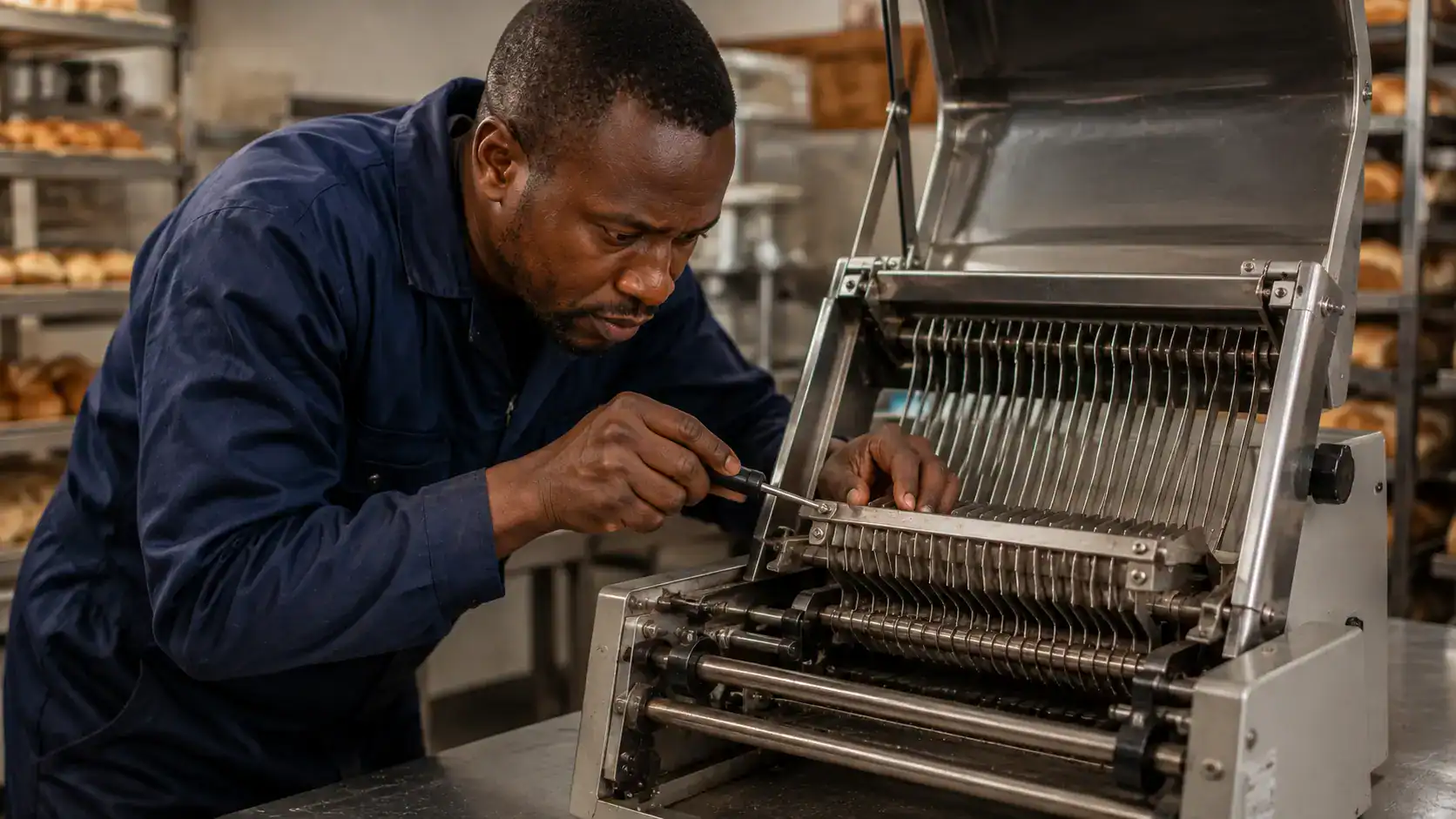
Our technicians handle bread slicer repair Kenya wide, from pin and band slicers to reciprocating blade models, across bakeries of every size, and every visit follows the same diagnostic process outlined above. If your slicer is jamming, tearing loaves, or running with unusual noise, our emergency repair service gets a technician to you fast, or you can book a standard equipment repair visit if the issue is not urgent yet. We also offer scheduled preventive maintenance plans that keep blades sharp and mechanisms clean before they start affecting slice quality.
Frequently Asked Questions
Can I sharpen slicer blades myself, or does that need a technician?
Slicer blades need precise, even sharpening across the full blade bank to cut evenly, and getting one blade slightly sharper than its neighbours can make slicing worse rather than better, so most bakers have a bread slicer repair Kenya technician handle sharpening or replacement rather than attempting it in-house.
How often should a commercial bread slicer be cleaned to prevent jamming?
A thorough clean at the end of every shift is standard practice for high-volume bakeries, since crumb buildup accumulates fast and is one of the most preventable causes of jamming on this list.
Why does my slicer only tear certain loaves and not others?
This pattern usually points to loaf temperature, size, or firmness rather than a machine fault, particularly if the affected loaves are freshly baked, still warm, or larger than your usual batch, since the machine is set up for a specific loaf range.
How much does a bread slicer repair in Kenya typically cost?
Pricing depends on the specific fault, but blade replacement and cleaning-related repairs are far cheaper than a drive belt or motor repair, which is why an early diagnostic visit usually pays for itself.
Do you offer emergency callouts if a slicer jams completely mid-shift?
Yes. Our emergency repair line is available for bakeries that cannot afford downtime, and a bakery equipment technician can usually reach you the same day within our service areas for any bread slicer repair Kenya wide.
Is it safe to clear a jam myself while the slicer is plugged in?
No. Always switch the machine off and unplug it before clearing a jam or inspecting the blade area. Slicer blades remain a serious injury risk even when the machine appears stopped.